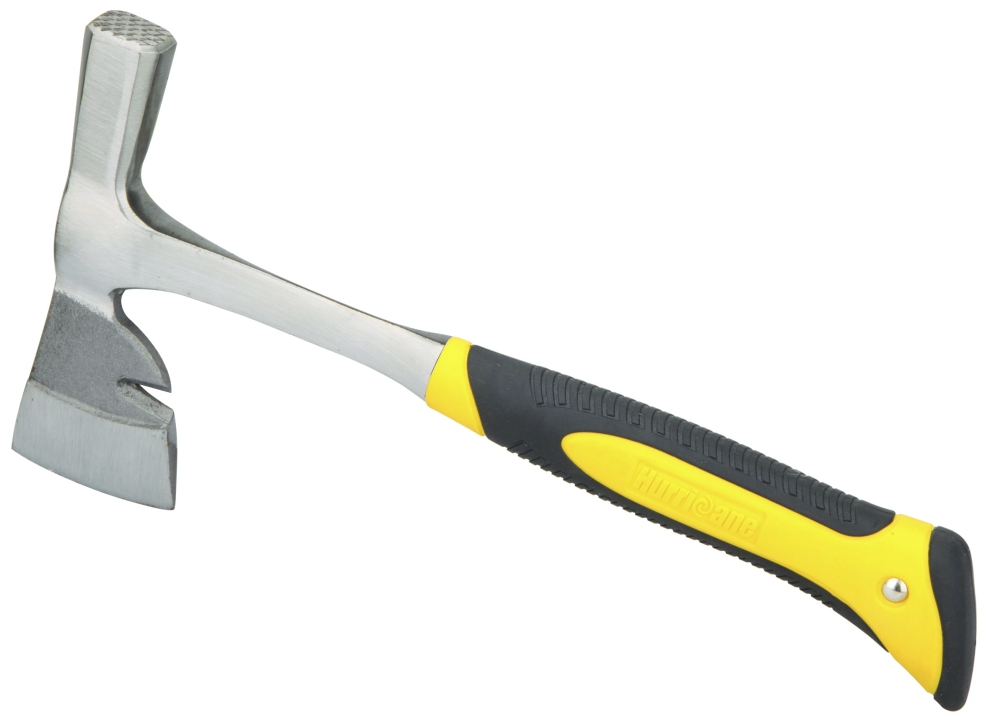
A martelo is a handheld striking tool designed to deliver controlled force through impact. It typically consists of a weighted head attached to a handle.
According to engineering and industrial manufacturing standards, hammers are primarily used to drive, shape, forge, break, pull, or assemble materials such as wood, metal, stone, nails, and construction components.
Research in industrial ergonomics and mechanical tool design shows that modern hammers have evolved into highly specialised tools used in the construction, woodworking, metalworking, automotive repair, mining, manufacturing, and precision engineering industries, as they efficiently convert human kinetic energy into concentrated mechanical force.
Why the Hammer Remains One of the Most Important Tools in Human History?
Of all the hand tools ever developed, few have retained the same level of universal relevance, industrial importance, and historical longevity as the hammer. Long before the advent of modern power tools, automated machinery, and advanced construction systems, the hammer was one of the earliest engineered tools used by humanity to shape the physical environment. Archaeological discoveries indicate that primitive hammer-like stone tools were used thousands of years ago to break materials, shape stone, construct shelters, process food, craft weapons, and form early tools. Over time, the hammer evolved from a simple stone striking object into a highly specialised engineering instrument with applications spanning nearly every industrial sector.
Today, modern hammers remain essential in construction, woodworking, demolition, manufacturing, automotive repair, metal fabrication, mining, mechanical assembly, maintenance operations, and industrial processing. Despite the growth of advanced machinery and automated production systems, hand hammers continue to play a critical role because they offer direct force control, portability, simplicity, reliability, low maintenance, mechanical precision, and versatility. The continued relevance of hammers demonstrates an important principle in industrial engineering: some tools remain indispensable because their basic mechanical function is fundamentally efficient.
A hammer’s effectiveness stems from its ability to convert kinetic energy into concentrated impact force. When the user swings the tool, the mass of the hammer head, combined with its velocity, generates striking energy capable of driving nails, shaping metal, cracking concrete, positioning components, breaking surfaces, and assembling structures.
The simplicity of this mechanism is why the hammer has survived for centuries despite technological advancements.
Modern hammer manufacturing has become highly sophisticated. Contemporary industrial hammers are now engineered using forged alloy steel, heat-treated striking surfaces, fibreglass handles, vibration reduction systems, ergonomic grip materials, anti-slip coatings and precision balancing technologies.
These advancements improve safety, durability, striking efficiency, user comfort, fatigue reduction, and accuracy.
At the same time, modern industries increasingly require highly specialised hammer designs tailored for specific applications. Consequently, today’s global tool market includes a wide range of hammers, such as claw hammers, ball peen hammers, sledgehammers, framing hammers, dead blow hammers, mallets, tack hammers, brick hammers, welding hammers, geologist hammers, scaling hammers and precision machinist hammers, each serving distinct operational requirements.
The hammer also occupies an important symbolic role within industrial culture. Across the construction, craftsmanship, and engineering professions, the hammer often represents skilled labour, productivity, structural creation, manual expertise, and industrial development. This cultural significance reinforces its enduring visibility across modern industries.
Therefore, understanding the definition of a hammer requires examining mechanical engineering principles, material science, industrial ergonomics, manufacturing technologies, historical development, application specialisation, workplace safety, and construction systems.
A hammer is far more than a simple striking object. It represents one of the foundational mechanical tools supporting human manufacturing, infrastructure development, and industrial progress.
What Is a Hammer?
A hammer is a handheld tool designed to deliver force through a repeated striking motion.
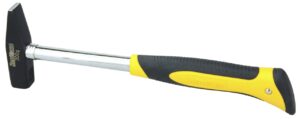
Most hammers consist of two main parts:
The hammer head, which provides mass and striking force, and the handle, which allows controlled movement and leverage.
The fundamental function of a hammer is to transfer energy from the user to a target object through impact.
Depending on the type of hammer, common uses include driving nails, shaping materials, forging metal, demolition, assembly work, breaking surfaces, alignment adjustment, and component installation.
Modern hammers can vary significantly in size, weight, head geometry, material composition, handle design, striking surface, and shock absorption.
The wide variety of hammer designs reflects the enormous range of industrial applications.
Main Components of a Hammer
Although hammer styles differ considerably, most models contain several essential structural components.
| Hammer Component | Function | Common Materials |
| Head | Delivers striking force | Forged steel, alloy steel |
| Face | Primary striking surface | Hardened steel |
| Claw or Peen | Pulling or shaping function | Heat-treated steel |
| Handle | User grip and leverage | Wood, fiberglass, steel |
| Grip | Improves comfort and control | Rubber, polymer |
Hammer head
The head is the primary force-generating section.
The weight of the head directly influences striking power, momentum, and application suitability. Heavier heads generate more impact force but require greater user control.
Handle
The handle controls leverage and swing dynamics.
Modern handles are engineered for comfort, vibration reduction, durability, and balance optimisation.
Striking face
The striking face is specially hardened to resist cracking, deformation, and surface wear.
Types of Hammers and Their Uses
One reason why hammers remain highly relevant is the wide range of specialised designs available in different industries.
Martelo de Garra
The claw hammer is one of the most widely recognised types of hammer.
Main uses: driving and removing nails, light carpentry, and household repair.
Key features: flat striking face, curved nail-pulling claw and balanced weight distribution.
Ball Peen Hammer
Ball peen hammers are commonly used in metalworking, fabrication, and machining for shaping metal, striking punches, and riveting operations.
Sledge hammer
Sledgehammers are designed for heavy-force applications.
Common uses:
- Demolition
- Concrete breaking
- Industrial construction
- Large-scale impact work
Rubber mallets deliver softer impacts without damaging surfaces.
Typical applications:
- Tile installation
- Trabalho em Madeira
- Assembly work
- Delicate alignment
Framing Hammer
Framing hammers are optimised for professional construction environments. Framing hammer
Framing hammers are optimised for professional construction environments.
They often feature:
- Longer handles
- Heavier heads
- Milled striking faces
How does a hammer work?
The operation of a hammer is based on the principle of mechanical energy transfer.
When a user swings the hammer:
- Motion creates kinetic energy.
- The hammer head accelerates.
- Impact transfers energy into the target surface.
The amount of force delivered depends on:
- Hammer mass
- Swing velocity
- Striking angle
- Impact surface area
Physics of Hammer Impact
The hammer functions as a momentum transfer system.
Higher velocity and greater mass increase the striking force.
However, excessive weight can reduce precision, swing speed, and user endurance, which is why different hammer designs exist for different tasks.
Materials Used in Hammer Manufacturing
Material engineering significantly affects hammer durability and performance.
| Material | Advantages | Common Applications |
| Forged Steel | High strength and durability | Industrial hammers |
| Carbon Steel | Wear resistance | General-purpose hammers |
| Fiberglass | Shock absorption | Professional construction |
| Hickory Wood | Traditional flexibility | Carpentry hammers |
| Rubber Coating | Grip enhancement | Ergonomic handles |
Forged steel heads
Forged steel provides strength, crack resistance, and a long service life.
Heat treatment improves hardness while maintaining toughness.
Fiberglass handles
Fiberglass handles reduce vibration, user fatigue, and the risk of handle breakage.
Wooden handles
Hickory remains popular because it offers natural shock absorption, a traditional feel, and balanced flexibility.
Industrial Applications of Hammers
The hammer remains an indispensable tool across numerous industries.
Construction industry
Construction workers rely on hammers for framing, roofing, concrete adjustment, and structural assembly.
Manufacturing industry
Factories use specialised hammers for metal shaping, assembly operations, maintenance, and machine repair.
Automotive repair
Mechanics use hammers for panel alignment, component installation, and repair procedures.
Mining and Demolition
Heavy hammers assist with:
- Rock breaking
- Surface removal
- Structural demolition
Ergonomics and Safety in Hammer Design
Modern hammer engineering increasingly focuses on user safety, ergonomic efficiency, vibration control, and reducing repetitive stress.
Common ergonomic features
Modern hammers may include:
- Anti-slip grips
- Shock-absorbing handles
- Balanced weight distribution
- Vibration dampening systems
Safety considerations
Proper hammer use requires:
- Eye protection
- Secure grip control
- Correct hammer selection
- Routine inspection
Damaged hammers may create serious workplace hazards.
How to Choose the Right Hammer?
The correct hammer for the job depends on:
- Application type
- Material hardness
- Force requirements
- User experience
- Workspace conditions
Light household tasks
Claw hammers are ideal for home repairs, furniture assembly, and small woodworking jobs.
Heavy construction
Framing hammers and sledgehammers provide greater force, structural durability, and industrial performance.
Precision work
Ball-peen hammers and rubber mallets are ideal for:
- Controlled striking
- Delicate assembly
- Metal shaping
Technological Advancements in Modern Hammer Manufacturing
Although the hammer is an ancient tool, modern engineering continues to improve its performance.
- Advanced metallurgy
Manufacturers are increasingly using alloy optimisation, precision forging and controlled heat treatment to improve durability.
- Vibration reduction systems
Modern industrial hammers reduce operator fatigue through internal damping systems, composite handle materials, and ergonomic balancing.
- Smart manufacturing
Hammer production now incorporates:
- CNC machining
- Robotic forging
- Automated quality inspection
These technologies improve consistency, safety, and product lifespan.
Common Mistakes When Using a Hammer
Using a hammer incorrectly can reduce efficiency and increase the risk of injury.
- Using the wrong hammer type
Each hammer is designed for specific applications.
Using the wrong hammer type may damage materials, fasteners, tools, and work surfaces.
- Poor grip technique
Weak grip control reduces striking accuracy.
- Ignoring tool wear
Damaged handles or chipped striking faces should be replaced immediately.
FAQ About Hammers
- What is the basic definition of a hammer?
A hammer is a handheld impact tool used to deliver force through striking motion for driving, shaping, breaking, or assembling materials.
- What are the main parts of a hammer?
Most hammers include a head, striking face, handle, and grip system.
- What is the most common type of hammer?
The claw hammer is the most common general-purpose hammer used for carpentry and household repairs.
- Why are hammer heads made from steel?
Steel provides high strength, durability, impact resistance, and long-term wear performance.
- What industries use hammers?
Hammers are widely used in construction, woodworking, manufacturing, automotive repair, mining, and metalworking.
- Are fiberglass handles better than wood?
Fiberglass handles generally provide better vibration resistance and durability, while wood offers traditional flexibility and natural feel.
Conclusão
The hammer is one of the most important and universally recognised tools in human history. It combines mechanical simplicity, force efficiency, durability, portability, and versatility in a compact, handheld design. From ancient stone tools to highly engineered industrial impact instruments, the hammer has evolved alongside human civilisation, supporting activities such as construction, manufacturing, metalworking, assembly, demolition and mining. The core mechanical principle of converting human motion into concentrated impact force continues to be highly effective in both traditional craftsmanship and modern engineering environments.
Meanwhile, advancements in metallurgy, ergonomic engineering, vibration control systems, composite materials and precision manufacturing technologies have transformed modern hammers into highly specialised professional tools optimised for safety, comfort, durability and performance. Whether used for residential repairs, industrial fabrication, automotive maintenance, or large-scale infrastructure projects, the hammer remains an indispensable component of the global industry, delivering reliable mechanical force in a simple, efficient, and adaptable form.