Αναλυτική περίληψη
Tin snips are vital hand tools used for cutting sheet metal, and they come in three main types characterized by their cutting direction and blade design. This guide explores straight-cut, left-cut, and right-cut tin snips (also known as aviation snips), providing details on their technical specifications, blade shapes, and best uses in metalworking and HVAC sectors.
Recognizing these differences helps professionals choose the right tool for accurate, fatigue-free cutting tasks. The color-coded handle system—yellow for straight cuts, red for left curves, and green for right curves—allows quick visual identification in busy fabrication settings.
Each type features specific blade offset angles and serration patterns designed to reduce material distortion and enhance cutting efficiency across gauges from 24-gauge aluminum to 18-gauge cold-rolled steel.
Understanding the Three Core Types of Tin Snips
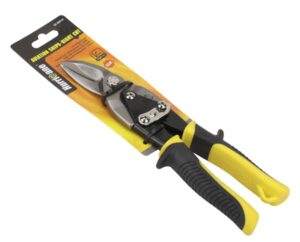
Straight-Cut Tin Snips (Yellow-Handled Aviation Snips)
Straight-cut tin snips have blades aligned in parallel, making them suitable for straight cuts on flat sheet metal. The yellow handle indicates the tool’s function, following the industry-standard color coding introduced in the 1950s, which helps tradespeople quickly recognize the tool’s purpose. These snips are ideal for cutting straight lines, gentle curves with radii larger than 12 inches, and notching tasks where a precise edge is important.
The blade geometry is offset by 0-5 degrees from the handle centerline, aligning the cutting edge directly with the applied force. This alignment reduces lateral blade deflection during cutting, resulting in clean edges with minimal burr formation. Professional-grade straight-cut snips usually cut through 24-gauge to 18-gauge mild steel, with the cutting capacity depending on the leverage ratios of the compound action.
Primary applications include:
- Ductwork fabrication for rectangular HVAC systems
- Roofing panel trimming and straight-edge flashing
- Metal siding installation where long, straight cuts dominate
- Notching operations in sheet metal brackets
- General-purpose cutting tasks in automotive body repair
Cutting capacity for straight snips ranges from 1.2mm (18-gauge) cold-rolled steel down to 0.5mm (24-gauge) materials. Blade lengths typically measure 50-65mm, with overall tool lengths between 240-280mm. The longer blade contact area distributes cutting forces more evenly, reducing the likelihood of material buckling during extended cuts.
Left-Cut Tin Snips (Red-Handled Aviation Snips)
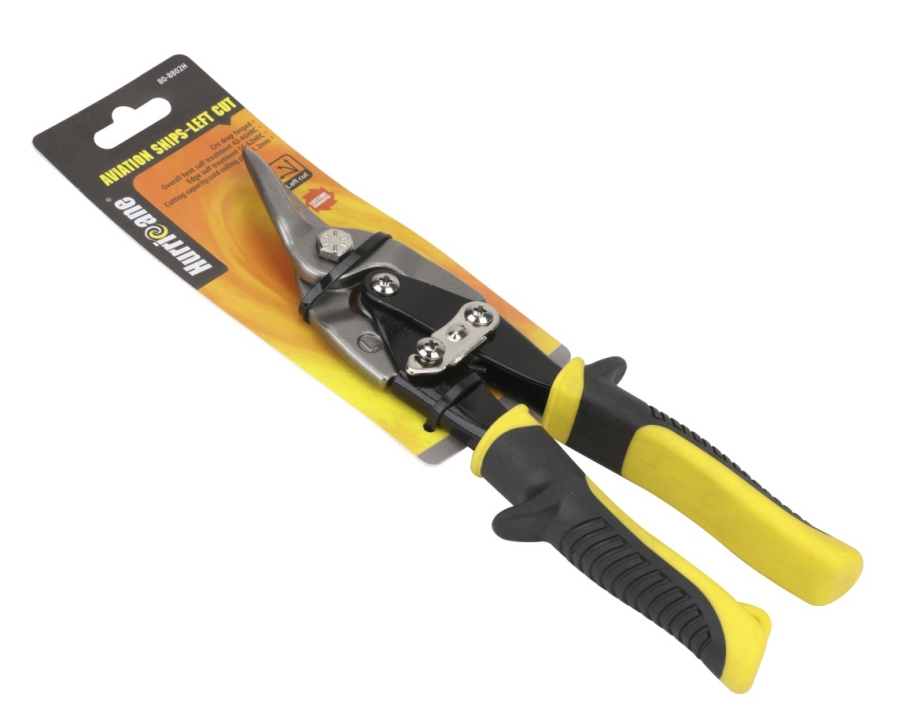
Left-cut tin snips use a blade offset that turns counterclockwise, specifically for cutting curves to the left. The red handle color coding allows quick identification in tool kits with various snip types. These snips direct waste material to the right of the cut, maintaining visibility of the workpiece and enabling the operator to follow marked cutting lines precisely.
The blade offset angle varies between 15 and 25 degrees relative to the handle axis, providing mechanical clearance for the lower blade to pass beneath curved material without interference. This geometry is essential when cutting tight-radius circles, as it prevents the tool body from touching the workpiece and hampers cutting progress. The offset design also places the operator’s hand above the cutting plane, enhancing visibility and decreasing wrist strain during long fabrication sessions.
Optimal applications include:
- Circular vent collar fabrication in HVAC installations
- Rounded corner cuts in decorative metalwork
- Spiral ductwork seam trimming
- Counterclockwise pattern cutting in automotive panels
- Left-turning curves in gutter and downspout fabrication
Professional metalworkers usually use left-cut snips for curves with a turning radius less than 6 inches. The serration pattern on the blade—typically 1.5-2.0mm pitch—ensures positive engagement with the material while minimizing drag resistance. The cutting capacity is comparable to straight-cut models, although the effective gauge thickness may be reduced by one step when cutting tight radii because of increased blade stress.
Right-Cut Tin Snips (Green-Handled Aviation Snips)
Right-cut tin snips mirror the left-cut design with an offset blade angled for clockwise curve cutting. The green handle designation completes the three-color system, allowing quick tool selection during multi-cut fabrication sequences. These snips direct waste material to the left, keeping clear sightlines to the workpiece edge throughout the cutting process.
The blade geometry features a 15-25 degree offset in the opposite direction from left-cut models. The lower blade passes above the workpiece during curved cuts. This setup is crucial for right-turning circles, elliptical patterns, and clockwise spiral cuts typical in sheet metal forming. The asymmetric blade design produces a natural cutting motion that suits the ergonomic preferences of right-handed operators. However, left-handed users often find better control with left-cut snips for similar patterns.
Common applications include:
- Right-turning radius cuts in HVAC transition fittings
- Clockwise spiral cuts in flexible duct connectors
- Rounded corner trimming in enclosure fabrication
- Circular hole enlargement operations
- Right-curving patterns in decorative metal panels
Blade length and cutting capacity specifications match left-cut models. Both curve-cutting types share similar mechanical advantage ratios. The compound-action pivot system common in aviation-style snips delivers 4:1 to 5:1 force multiplication. This reduces hand fatigue during repetitive cutting operations. This leverage advantage becomes particularly valuable when working with harder materials like 20-gauge stainless steel or 18-gauge galvanized steel.
Τεχνικές Προδιαγραφές και Αποδοτικές Παράμετροι
Blade Material and Cutting Force
Professional-grade tin snips use high-carbon steel blades with hardness ratings ranging from 56 to 62 HRC (Rockwell C scale). This hardness range offers an ideal balance between maintaining a sharp edge and resisting impact, enabling blades to stay sharp through thousands of cuts while resisting chipping when cutting weld seams or fasteners. High-end models feature molybdenum-vanadium alloy steel, which provides better toughness and wear resistance than typical carbon steel options.
Blade manufacturing processes greatly influence cutting performance. Precision-ground blades with hollow-ground bevels decrease cutting friction by 15-20% compared to standard flat-ground edges. The hollow grind forms a concave surface behind the cutting edge, reducing the contact area with material during shearing. Some manufacturers coat blade surfaces with titanium nitride (TiN), which enhances surface hardness to over 80 HRC and lowers friction coefficients to 0.4-0.5, compared to 0.6-0.7 for uncoated steel.
Compound-action mechanisms increase input force by using dual-pivot systems, usually providing mechanical advantage ratios of 4:1 to 5:1. This setup places the main pivot point nearer to the blade tips, while a secondary pivot near the handle grips boosts the operator’s force. As a result, cutting 18-gauge steel needs about 40-50 pounds of hand pressure with compound-action snips, compared to 80-100 pounds with conventional single-pivot designs.
Stainless steel blades are used in specialized applications that need corrosion resistance, but they tend to have less edge retention than high-carbon options. Marine-grade 440C stainless (58-60 HRC) provides the best balance, keeping enough hardness while resisting corrosion from salt air. Nonetheless, most professional fabricators favor high-carbon blades with protective coatings for better cutting performance.
Cutting Capacity and Material Compatibility
Cutting capacity varies significantly based on material type, hardness, and blade condition. Standard aviation snips handle the following maximum gauges under optimal conditions:
Comparative Specifications Table
| Snip Type | Handle Color | Max Cutting Gauge (Steel) | Max Gauge (Aluminum) | Μήκος Λεπίδας | Ideal Cutting Pattern | Material Compatibility |
|---|---|---|---|---|---|---|
| Straight-Cut | Yellow | 18-gauge (1.2mm) | 16-gauge (1.3mm) | 50-65mm | Linear cuts, gentle curves >12″ radius | Mild steel, galvanized, aluminum, copper |
| Left-Cut | Red | 18-gauge (1.2mm) | 16-gauge (1.3mm) | 50-60mm | Counterclockwise curves, <6″ radius | Mild steel, galvanized, aluminum, vinyl-coated |
| Right-Cut | Green | 18-gauge (1.2mm) | 16-gauge (1.3mm) | 50-60mm | Clockwise curves, <6″ radius | Mild steel, galvanized, aluminum, vinyl-coated |
Material-specific considerations:
- Aluminum: Softer material allows cutting one gauge thicker than steel ratings. However, aluminum’s tendency to gum blade edges requires more frequent cleaning.
- Galvanized steel: Zinc coating adds minimal cutting resistance but accelerates blade wear by 10-15% compared to bare steel.
- Copper: Excellent machinability allows easy cutting, though material softness may cause edge folding if blades lack sharpness.
- Stainless steel: Requires upgrading to heavy-duty models or reducing maximum gauge by 2 steps (e.g., 20-gauge maximum instead of 18-gauge for mild steel).
Edge retention characteristics are influenced by blade hardness, material type, and cutting technique. Blades of high quality stay sharp from the factory for 5,000-8,000 linear feet of cutting 22-gauge steel before needing professional resharpening. Cutting tougher materials such as stainless steel or dealing with abrasive zinc coatings shortens this period by 30-40%.
Application Scenarios and Selection Criteria
HVAC and Sheet Metal Fabrication
HVAC professionals depend on all three snip types for ductwork assembly, choosing tools based on particular cutting needs. For rectangular duct fabrication, straight-cut snips are used for long seam cuts and flange trimming, whereas round duct installations need both left-cut and right-cut models for collar fabrication and circular penetrations.
Precision cutting requirements in ductwork assembly prioritize edge quality rather than speed. Edges that are poorly cut lead to gaps in seam connections, which can compromise the system’s air-tightness and decrease HVAC efficiency. Professional fabricators keep blades sharp by regularly inspecting and replacing them, understanding that dull blades can cause burr formation to increase by 300-400% compared to sharp edges.
Ergonomic considerations are essential during repetitive cutting tasks. Compound-action snips decrease hand fatigue by 40-50% compared to traditional models, helping fabricators stay productive during 8-hour shifts. Spring-loaded handles open the blades automatically after each cut, removing the need for manual finger extension and lowering the risk of repetitive strain injuries. Cushioned handle grips with thermoplastic elastomer (TPE) coatings help absorb vibrations and prevent pressure points during prolonged use.
Typical daily usage patterns in commercial HVAC installation:
- Straight-cut snips: 60-70% of cutting operations (duct seams, flange trimming, straight edges)
- Left-cut snips: 15-20% (counterclockwise collars, left-turning transitions)
- Right-cut snips: 15-20% (clockwise collars, right-turning transitions)
Roofing and Construction Applications
Roofing contractors focus on durability and field reliability when choosing tin snips, since tools encounter tough environmental conditions such as temperature extremes, exposure to precipitation, and accidental drops from high work platforms. Construction-grade snips feature reinforced pivot points, corrosion-resistant fasteners, and impact-resistant handle materials to endure job-site wear and tear.
Flashing installation demands accurate cuts in galvanized steel, aluminum, or copper materials ranging from 26-gauge to 22-gauge. Most valley flashing and drip edge work can be done with straight-cut snips, whereas curve-cutting models are vital for rounded chimney flashing and custom architectural features. Precise cutting without distorting the material helps prevent water infiltration at weak points in the roof.
Gutter fabrication and installation require both straight and curved cutting skills. Straight snips are used to trim gutter lengths and make end caps, whereas left-cut and right-cut models are used to form rounded corners and circular downspout connections. Professional gutter installers usually have all three types of snips, choosing the appropriate tool based on the specific cutting task instead of trying to force unsuitable tools into unsuitable jobs.
Safety features in construction-grade snips include:
- Spring-loaded handles with lock-open positions preventing accidental blade closure during transport
- Blade guards protect cutting edges when stored in tool belts or bags
- Non-slip grip texturing maintains control in wet or oily conditions
- Lanyard attachment points prevent tool loss when working at heights
Compliance Standards and Quality Benchmarks
Industry Certifications and Testing Protocols
Professional tin snips designed for commercial use must adhere to ANSI B107.18 standards that regulate hand-operated metal-cutting shears. This specification sets out the minimum criteria for blade hardness (at least 54 HRC), verification of cutting capacity, handle strength, and pivot durability. Tools undergo compliance testing involving 10,000-cycle fatigue tests that mimic years of professional use, with a failure rate below 2% necessary for certification.
ISO 5743 specifications establish international standards for hand-operated shears, outlining testing methods for measuring cutting force, tolerances for blade alignment (with a maximum deviation of ±0.5mm), and ergonomic handle design. European manufacturers usually seek ISO certification in addition to ANSI compliance to guarantee that their products adhere to worldwide quality standards.
Fatigue testing cycles assess long-term durability by using accelerated wear protocols. Premium manufacturers perform over 25,000 cycle tests that surpass minimum standards, detecting possible failure modes in pivot pins, blade mounting points, and handle attachment interfaces. Tools that pass extended testing usually come with lifetime warranties against manufacturing defects.
Manufacturer warranties vary from a 90-day limited coverage on economy models to lifetime guarantees on professional-grade tools. Comprehensive warranties include blade replacement, pivot repair, and handle component failure, although most do not cover normal wear from cutting abrasive materials or damage caused by misuse (such as cutting hardened steel wire or using snips as pry bars).
Modul FAQ
Q1: Can I use left-cut tin snips for right-hand curves if I adjust my grip angle?
Attempting to cut against the blade offset design results in poor outcomes and raises the risk of injury. Left-cut snips have the lower blade positioned to pass underneath the material during counterclockwise cuts; forcing them to make clockwise cuts causes the tool body to interfere with the workpiece, hindering proper cutting progress.
The blade geometry produces waste material on the right side, which can obscure the cutting line when used for right-hand curves. Furthermore, reversing the cutting direction exerts force on the blade edges at improper angles, speeding up wear and increasing the risk of blade fracture. Professional fabricators keep both left-cut and right-cut snips to ensure the best performance for all curved cutting tasks.
Q2: What gauge of stainless steel requires upgrading from standard aviation snips to power shears?
Standard aviation snips are suitable for cutting up to 20-gauge (0.9mm) stainless steel, although some manufacturers may specify an 18-gauge capacity. When exceeding 20-gauge, the material’s tendency to work-harden and its higher yield strength (about twice that of mild steel) lead to increased hand fatigue and faster blade deterioration.
For 18-gauge stainless steel and thicker, electric or pneumatic shears are required. Power shears provide a steady cutting force regardless of the material’s hardness, ensuring edge quality and decreasing operator fatigue. The switch point also varies with cutting volume: occasional stainless cuts might be suitable for manual snips, whereas daily stainless fabrication requires powered tools.
Q3: How do compound-action tin snips differ from traditional lever-action models in cutting force efficiency?
Compound-action snips use dual-pivot mechanisms that generate mechanical advantage ratios of 4:1 to 5:1, whereas traditional single-pivot designs typically have ratios of 2:1 to 2.5:1. The main pivot is located close to the blade tips, and a secondary pivot near the handle grips enhances the input force through geometric multiplication.
This setup decreases the necessary hand pressure by 50-60% for the same cutting capacity. For instance, cutting 18-gauge steel needs about 45 pounds of grip force with compound-action snips compared to 90 pounds with conventional models. The efficiency improvement is especially important during repetitive cutting tasks, as it lessens hand fatigue and allows for extended periods of productive work. High-quality compound-action designs also provide a more stable cutting force throughout the blade’s movement, enhancing edge quality and minimizing material distortion.
Συμπέρασμα
The three types of tin snips—straight-cut (yellow), left-cut (red), and right-cut (green)—are designed for particular cutting geometries in sheet metal work. Choosing the correct type according to the cutting pattern, material thickness, and application setting guarantees efficient operation, minimizes hand fatigue, and prolongs the tool’s durability. Straight-cut snips are primarily used for straight cuts and gentle curves, whereas left-cut and right-cut models are vital for precise circular cuts with tight radii and curved designs.
Technical specifications, such as blade material (56-62 HRC high-carbon steel), compound-action leverage ratios (4:1 to 5:1), and cutting capacity ratings (18-gauge mild steel standard), directly influence tool performance and durability. Knowing these parameters helps make informed procurement choices tailored to particular fabrication needs. HVAC professionals, roofing contractors, and metal fabricators gain from keeping complete three-snip sets, which guarantee the best tool availability for various cutting tasks.
For procurement of certified aviation snips meeting ANSI B107.18 and ISO 5743 compliance standards, evaluate blade material grades, cutting capacity ratings, and ergonomic handle designs. Premium tools incorporating titanium-nitride coatings, spring-loaded handles, and reinforced pivot systems deliver superior performance in demanding professional applications. Investing in quality cutting tools reduces operational costs through extended blade life, decreased hand fatigue, and improved cutting precision across thousands of fabrication cycles.