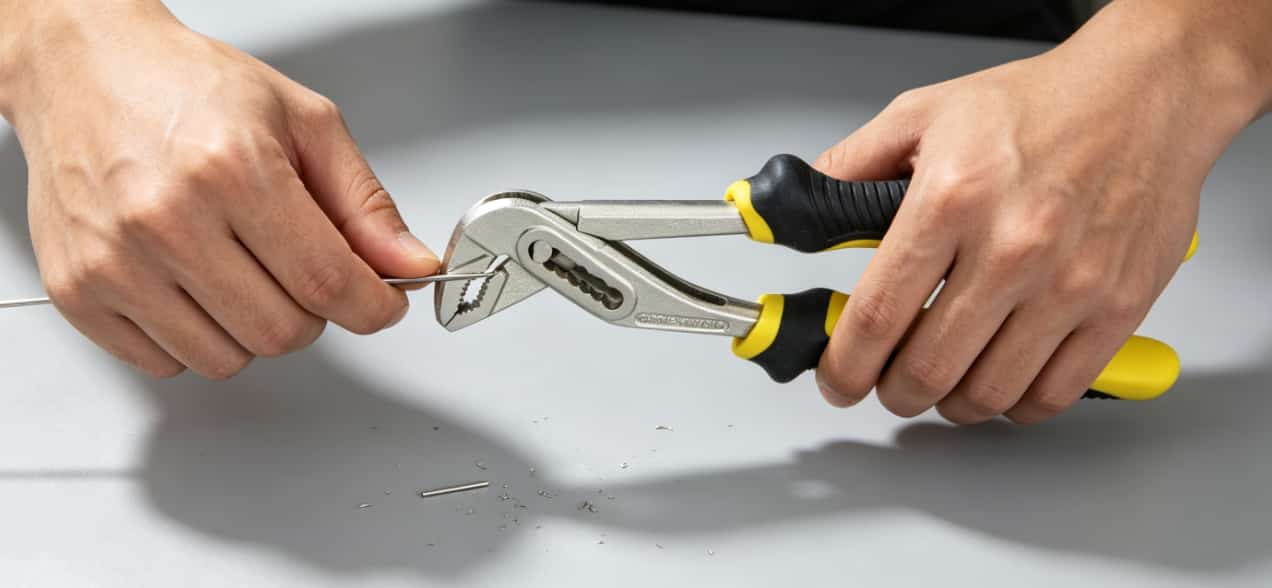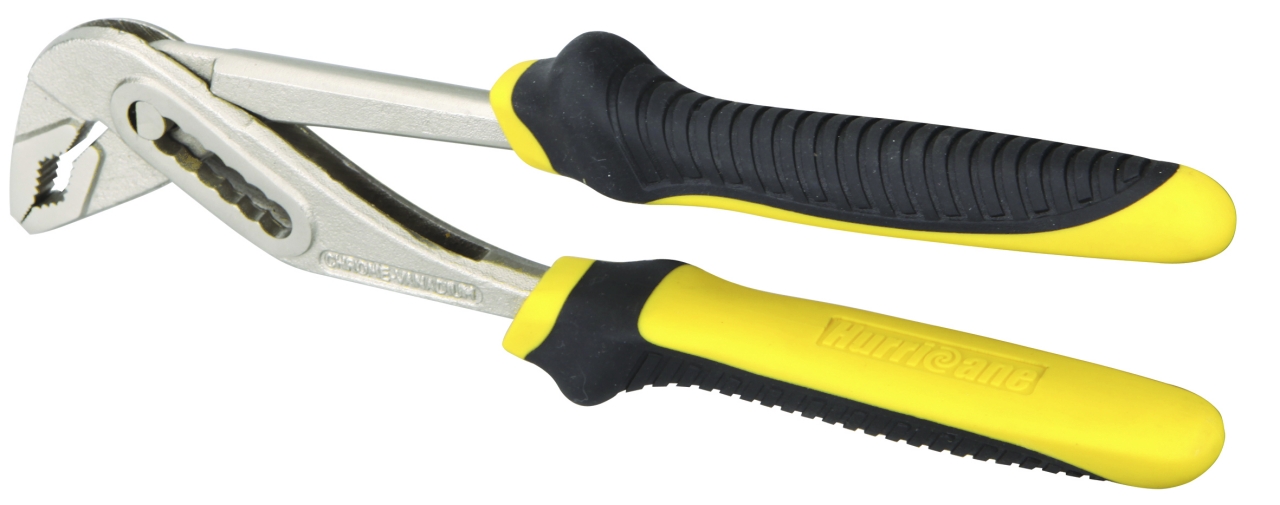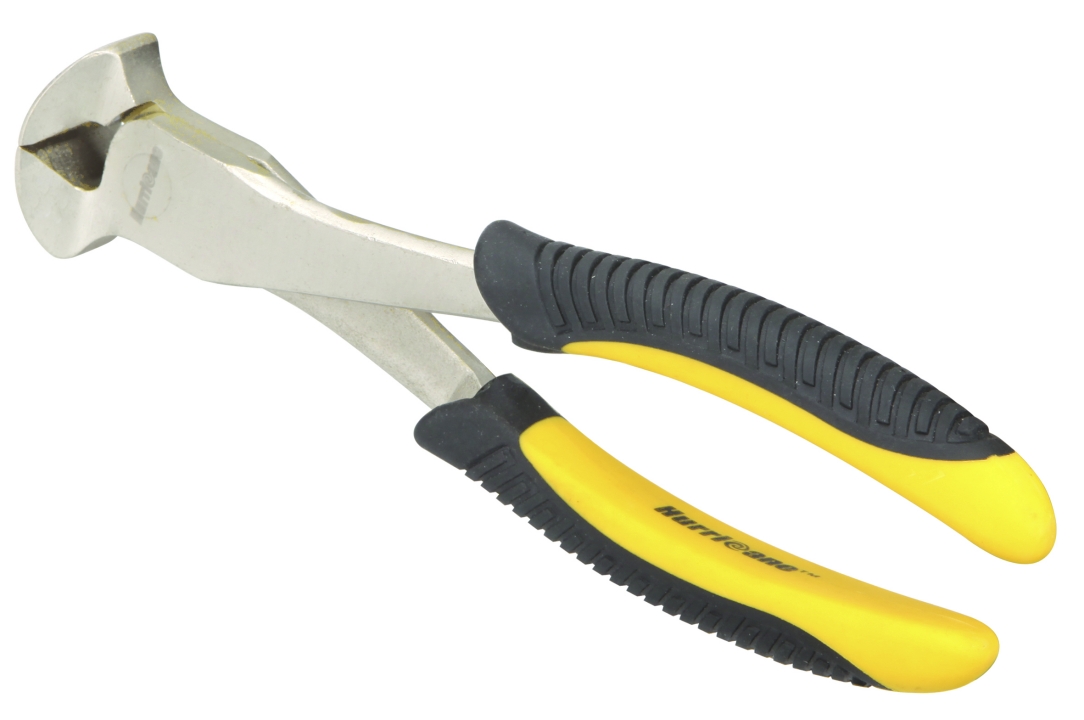
Lukituspihtit, also known as locking clamps or Vise-Grip tools, are adjustable hand tools designed to lock onto a workpiece using a mechanical toggle mechanism that multiplies hand force to create a strong, self-locking grip. According to the classification of industrial tools in Machinery’s Handbook (Industrial Press) and engineering references in literature on tool mechanics, locking pliers are categorised primarily by jaw geometry and application design. Examples include curved-jaw, straight-jaw, long-nose, C-clamp, and speciality locking pliers. Each type is designed for specific gripping, welding, fastening, or maintenance tasks, with variations in clamping force, reach, and surface contact behaviour.
Understanding the different types of locking pliers is therefore essential for selecting the right tool for mechanical repairs, metal fabrication, automotive work, and construction tasks where a temporary but extremely strong grip is required.
Introduction: Why Locking Pliers Are More Than Just “Strong Pliers”
At first glance, locking pliers resemble an upgraded version of standard pliers. However, mechanically, they are closer to a manual clamping system with a built-in toggle lock mechanism. Unlike regular pliers, which require continuous hand pressure, locking pliers use a compound leverage system that locks the jaws in place once the correct pressure threshold is reached.
This design solves a very specific industrial problem: how to maintain an extremely high gripping force without continuous human effort.
This is why they are widely used in automotive repair, welding, metal fabrication, plumbing, and machinery maintenance. Once locked, they behave more like a temporary bench vise than a hand tool.
However, not all locking pliers are the same. The differences lie in jaw shape, throat depth, accessibility, and intended application. It is these differences that define performance in real-world tasks far more than brand or size alone.
How Locking Pliers Work (Mechanical Principle)?
Before we break down the different types of locking pliers, it is important to understand how they all work.
Locking pliers operate using a toggle linkage system combined with an over-centre locking mechanism.
The adjustable screw sets the jaw opening size and the pressure threshold. The handle force pushes a compound linkage forward. Once the linkage passes the centre point (‘over-centre’), it locks mechanically. A release lever then disengages the mechanism, creating a self-locking grip that increases the force exponentially compared to hand pressure alone (y = x²). Conceptually, the grip force behaves non-linearly — small increases in handle force result in disproportionately large clamping force, similar to a non-linear mechanical amplification curve.
This is why locking pliers can hold materials under vibration, torque, or heat without slipping.
Main Types of Locking Pliers
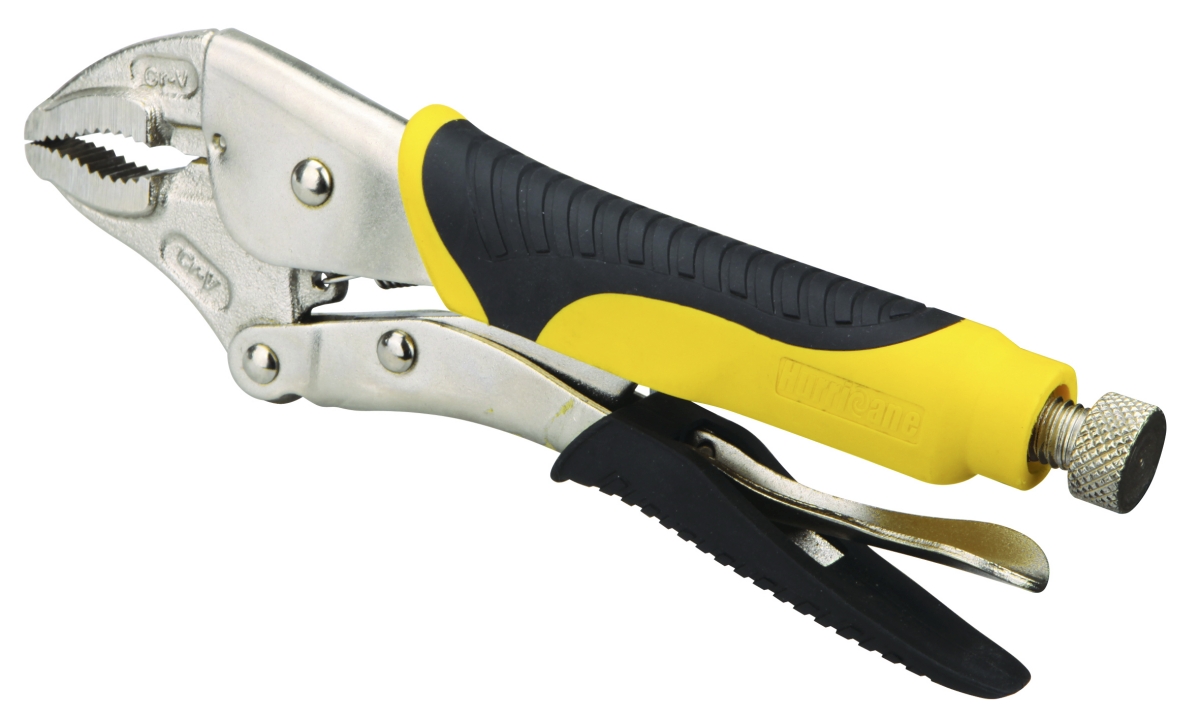
1) Kaarevammanteraiset lukkopihdit (Standard Vise-Grip Type)
Curved-jaw locking pliers are the most common and widely recognized type. Their jaws are slightly rounded, allowing them to grip a variety of shapes, including bolts, nuts, pipes, and irregular surfaces.
Key characteristics:
- High clamping force
- Excellent versatility
- Strong grip on round and flat objects
- Ideal for general repair work
These pliers are often the default choice in automotive repair shops because they balance grip strength and adaptability. However, the curved jaw design means they may not provide the most stable contact on very thin or delicate surfaces.
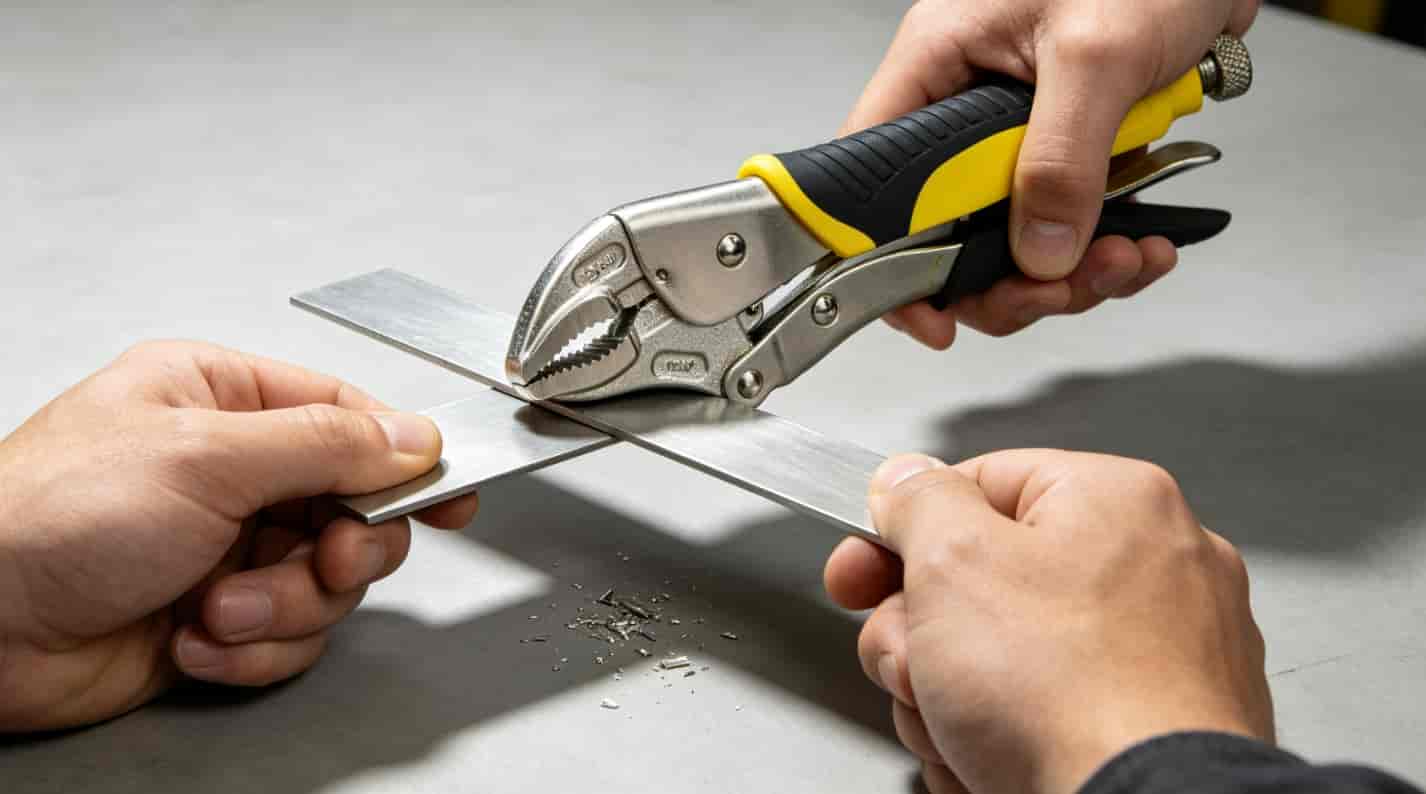
2) Straight-Jaw Locking Pliers
Straight-jaw locking pliers feature flat, parallel jaws that provide more uniform surface contact. This makes them ideal for gripping flat metal pieces or working with materials where controlled pressure distribution is important.
Key characteristics:
- Better surface contact on flat materials
- Reduced risk of surface deformation
- More precise alignment holding
- Common in fabrication and sheet metal work
Compared to curved-jaw versions, straight-jaw pliers are less versatile but more precise. They are often used in welding setups where alignment accuracy is critical before permanent joining.
3) Long-Nose Locking Pliers
Long-nose locking pliers extend the jaw reach into narrow or confined spaces. Their elongated jaws allow access into deep mechanical assemblies where standard pliers cannot reach.
Key characteristics:
- Extended reach into tight spaces
- Suitable for electrical and automotive work
- Good for gripping small components or wires
- Lower overall clamping surface area
These are especially useful in automotive dashboards, engine bays, and electrical systems where space constraints are a major challenge.
4) C-Clamp Locking Pliers
C-clamp locking pliers function more like portable bench clamps. They provide deep throat reach and extremely strong clamping force, making them ideal for welding, gluing, and structural alignment tasks.
Key characteristics:
- Deep reach (throat depth)
- Extremely high clamping force
- Ideal for welding and fabrication
- Stable, stationary hold
Unlike standard locking pliers, C-clamp versions are designed for static holding rather than frequent repositioning. They are commonly used in metal workshops and fabrication environments.
Main Types of Locking Pliers and Their Applications
| Type | Jaw Design | Primary Use | Strength | Limitation |
| Kaarevammanteraiset lukkopihdit | Curved, serrated jaws | General-purpose gripping | Very high versatility | Can mark delicate surfaces |
| Straight-Jaw Locking Pliers | Flat parallel jaws | Sheet metal, flat surfaces | High precision grip | Less effective on round objects |
| Long-Nose Locking Pliers | Extended narrow jaws | Tight spaces, electrical work | Good accessibility | Lower grip surface area |
| C-Clamp Locking Pliers | Deep throat clamp design | Welding, fabrication | Extremely strong clamping force | Bulkier, slower adjustment |
5) Locking Chain Pliers (Specialty Type)
Locking chain pliers use a chain loop instead of traditional jaws. The chain wraps around irregular or large objects such as pipes or fittings, allowing the tool to lock onto shapes that standard jaws cannot grip.
Key characteristics:
- Adjustable chain loop grip
- Excellent for irregular or large diameters
- Used in plumbing and pipe fitting
- High adaptability in industrial maintenance
They are particularly useful in environments where pipe shapes vary or where standard jaw geometry fails to provide secure contact.
6) Locking Welding Pliers (Specialized Holders)
These are modified locking pliers designed specifically for welding applications. They often include heat-resistant materials, flat gripping surfaces, or specialized jaw shapes to hold metal pieces during welding.
Key characteristics:
- Heat-resistant construction
- Stable grip under vibration and heat
- Designed for fabrication alignment
- Often used as temporary third-hand tools
In welding environments, they function more as temporary positioning fixtures than gripping tools.
Why Different Types Matter in Real Applications?
The differences between locking plier types are not merely design variations—they directly determine performance, safety, and work quality in real industrial and maintenance environments. Each jaw geometry is engineered for specific force distribution, contact behavior, and workpiece compatibility.
Grip Stability Under Load
Different jaw designs distribute clamping force differently.
Curved-jaw pliers concentrate force at fewer contact points, improving grip on round surfaces
Straight-jaw pliers distribute force more evenly across flat surfaces
Why it matters:
- Incorrect selection can lead to:
- Slippage under torque
- Uneven clamping pressure
- Reduced holding strength during machining or repair
Surface Protection vs. Marking
Material contact geometry directly affects whether the workpiece is damaged.
Curved jaws → higher risk of indentation on flat or thin materials
Straight jaws → better surface protection for sheet metal and flat parts
Why it matters:
- Cosmetic damage in visible parts
- Functional damage in precision components
- Increased post-processing or rework costs
Accessibility in Confined Spaces
Tool geometry affects how easily it can reach tight or obstructed areas.
Narrow-profile locking pliers are better for restricted environments
Larger curved jaws may be limited in tight assemblies
Why it matters:
- Efficiency in maintenance and repair work
- Reduced need for disassembly of surrounding components
Alignment Precision in Fabrication
Precision alignment depends on consistent clamping behavior.
Straight-jaw pliers provide better parallel contact for flat alignment
Curved jaws are less suitable for precision alignment tasks
Why it matters:
- Affects welding accuracy
- Impacts machining setup quality
- Influences dimensional consistency
Resistance to Vibration and Torque
In dynamic environments, stability under force fluctuations is critical.
Curved jaws often perform better on cylindrical parts under rotation
Straight jaws maintain stability on flat, static assemblies
Why it matters:
- Prevents loosening during vibration
- Ensures safe operation in high-torque conditions
- Reduces tool failure risk
- Real-World Consequences of Incorrect Selection
Using the wrong type of locking plier can result in:
❌ Slippage under load
❌ Surface deformation or marking
❌ Reduced grip reliability
❌ Inefficient workflow and rework costs
❌ Increased safety risks
Example:
- Curved-jaw pliers on thin sheet metal → visible dents and deformation
- Straight-jaw pliers on round pipes → reduced grip stability and slippage
Choosing the Right Locking Pliers for the Job
| Application Scenario | Recommended Type | Reason |
| Automotive repair | Curved-jaw or long-nose | Versatile grip and accessibility |
| Welding and fabrication | C-clamp or straight-jaw | Stability and alignment precision |
| Electrical work | Long-nose locking pliers | Reach into confined areas |
| Plumbing and pipes | Chain locking pliers | Adapt to irregular shapes |
| Sheet metal work | Straight-jaw locking pliers | Prevent surface damage |
How Professionals Actually Use Locking Pliers in Real Workflows?
While basic explanations of locking pliers tend to focus on grip types and jaw shapes, in real industrial environments, the tool is often used for purposes that go beyond simply ‘holding objects’. Mechanics, welders, and fabricators treat locking pliers as temporary mechanical fixtures rather than just hand tools.
In automotive repair, for example, curved-jaw locking pliers are frequently used to hold stripped bolts in place while breaking loose the torque. In welding, straight-jaw and C-clamp variants act as alignment stabilisers before permanent tack welds are applied. In plumbing, chain-type locking pliers can compensate for irregular pipe geometries where standard jaws would fail to achieve uniform pressure distribution.
The key professional insight is this: locking pliers are not just about grip strength; they are also about maintaining force stability under dynamic conditions, including vibration, heat, and torque fluctuation.
Material and Build Quality Differences
Not all locking pliers are created equal. The differences often stem from the composition of the steel, the heat treatment, and the precision of the jaw machining.
High-quality locking pliers typically feature:
- Chrome vanadium steel for strength and fatigue resistance
- Heat-treated jaws for long-term wear resistance
- Precision-ground serrations for improved grip stability
Lower-end tools may deform under heavy loads, especially in high-torque applications such as automotive suspension work or structural welding.
This is why professional-grade tools maintain consistent locking performance even after thousands of cycles, whereas cheaper versions may lose alignment or locking sensitivity over time.
Common Mistakes When Using Locking Pliers
Even though locking pliers are simple tools, improper usage can lead to damage or reduced performance.
1) Over-tightening the adjustment screw
Many users assume tighter is better. In reality, excessive pre-load reduces the toggle mechanism’s efficiency and can damage the jaws or reduce locking reliability.
2) Using the wrong jaw type
Using curved jaws on flat sheet metal can cause slipping or surface indentation. Similarly, straight jaws on round pipes reduce grip security.
3) Using it as a permanent clamp
Locking pliers are designed for temporary holding, not permanent fixation. Long-term use can damage both the tool and the workpiece.
4) Ignoring release mechanism maintenance
Dirt, rust, or welding spatter can reduce the smooth release of the locking lever, making disengagement difficult or unsafe.
Safety Considerations
Because locking pliers generate extremely high localized force, they should always be used with awareness of mechanical load behavior.
- Avoid placing fingers near jaw pinch zones
- Do not exceed tool-rated torque limits
- Wear eye protection in high-tension applications
- Ensure secure engagement before applying external force
In industrial environments, accidental slippage under tension can cause sudden release forces that may lead to injury or material damage.
FAQ: Locking Pliers (High-Search Questions)
1) What are locking pliers used for?
Locking pliers are used to grip, clamp, and hold objects securely in place during mechanical, welding, automotive, and construction tasks where a high holding force is required.
2) What is the difference between locking pliers and regular pliers?
Regular pliers require continuous hand pressure, while locking pliers use a mechanical toggle system that locks the jaws in place, allowing hands-free clamping.
3) What are the different types of locking pliers?
The main types include curved-jaw, straight-jaw, long-nose, C-clamp, chain locking pliers, and welding-specific locking pliers.
4) Can locking pliers damage bolts or surfaces?
Yes. Serrated jaws can leave marks or deform softer materials if excessive force is applied or if the wrong jaw type is used.
5) Are locking pliers strong enough for industrial use?
Yes. High-quality locking pliers made from heat-treated steel can withstand significant clamping force and are widely used in industrial, automotive, and fabrication environments.
6) How do you release locking pliers safely?
Most locking pliers use a rear release lever that disengages the toggle mechanism. It should be operated carefully while maintaining control of the tool to avoid sudden release movement.
Why Locking Pliers Remain Essential in Modern Industry?
Despite advances in automated clamping systems and powered tools, locking pliers remain indispensable due to their simplicity, portability, and mechanical reliability. They do not require power, calibration, or complex setup, making them ideal for field work, emergency repairs, and rapid prototyping environments.
In manufacturing and repair workflows, they function as a bridge tool between manual adjustment and permanent fastening, giving technicians flexibility before final assembly or welding.
Johtopäätös
To select the right tool for precision, safety, and efficiency in real-world applications, it is essential to understand the different types of locking pliers. Each design, whether curved-jaw, straight-jaw, long-nose, C-clamp, or chain-type, serves a specific mechanical purpose defined by accessibility, grip geometry, and force distribution.
Rather than treating locking pliers as a single, universal tool, professionals view them as a family of mechanical gripping systems, each optimised for different types of load, space constraints, and material behaviour.
Selecting the correct tool for the job improves work quality, safety, and efficiency in automotive repair, welding, plumbing, and industrial fabrication tasks.