Abstract:
Hand tools like bestanden and rasps have had a significant impact on wood, metal, and composite materials for centuries, despite the fact that they are traditionally made by craftsmen and precision manufacturing.
Files are precision instruments that have hardened steel teeth in a specific pattern that remove small quantities of material and smooth surfaces. Similarly, the Machinist’s Handbook (Industrial Press, latest edition) describes rasps as versatile tools that are primarily utilized in woodworking and farriery for the rapid removal of stock and the definition of contours.
The research published in the Journal of Materials Processing Technology emphasized the continued importance of manual processes that are controlled by the user, such as filing. This process is still crucial to achieving precise tolerances and high quality in both the creation of metal objects and the making of tools.
Based on these authoritative sources, the guide contains a description of the structure, classification, working principles, materials, applications, and the significance of vijlen en raspjes to the industry.
Introduction: Why Files and Rasps Still Matter in Modern Industry?
In an era characterized by CNC centers that cut by laser and automated systems that finish the work, it may be perceived as an indication that hand tools have become obsolete. However, files and rasps still have a significant role in workshops, manufacturing facilities, construction sites, luthiery studios, and even aerospace production lines.
Their importance is not in replacing machines, but instead in adding to them. No automated system can eliminate the need for manual post-harvest treatment, such as cleaning, drying, and fine surface correction.
Files and rasps are specialized tools that are used to remove material in a pre-programmed manner. While both are considered to be tools for abrasion, they differ in the way they cut, their aggressiveness towards cutting, and the purpose of their application.
Files are typically associated with metal crafting and fine surface preparation, whereas rasps are typically employed in wood crafting and rough shaping.
Understanding their importance necessitates a more complex definition. It necessitates an understanding of their geometry, metallurgy, ergonomic design, and practical applications. This article provides a comprehensive, technically-based explanation that is appropriate for professionals in the industry, tool vendors, manufacturing companies, and dedicated craftsmen.
Defining Files and Rasps: Structure and Basic Characteristics
At the core, files and rasps are composed of hardened steel that has a series of cutting teeth formed on its surface. These teeth function as small choppers and remove material from the surface of the chip when you push the tool across the workpiece. The effectiveness and ease of material removal are dependent on the tooth’s size, spacing, orientation, and depth.
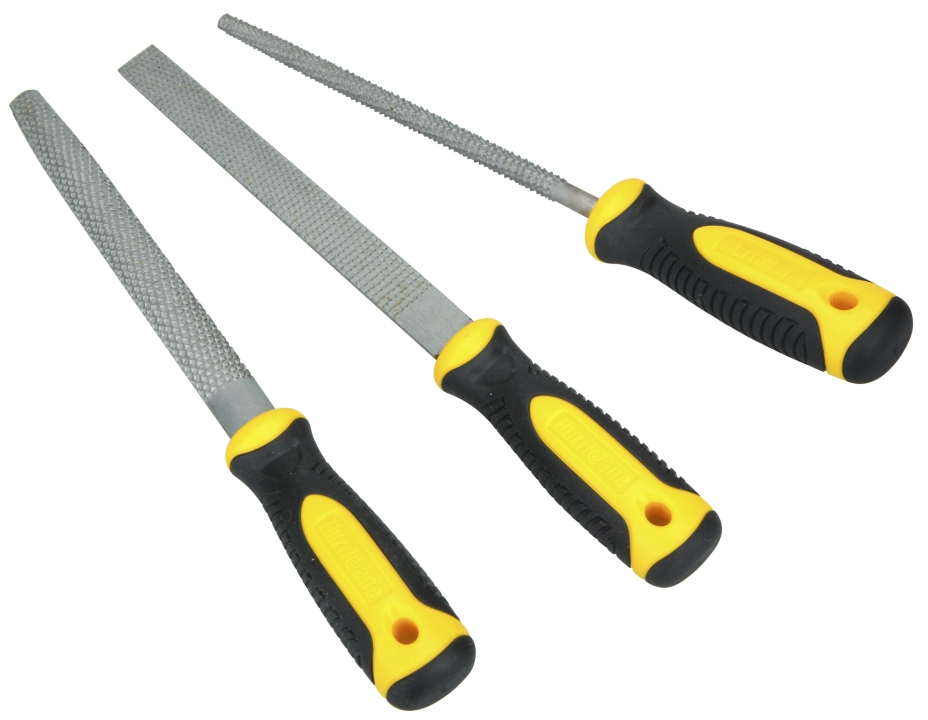
A file’s teeth are typically organized into parallel groups. These teeth are single- or dual-cut, depending on the purpose. A rasp has teeth that are individually grown; these are typically formed by punching instead of milling. This design facilitates the removal of material from softer materials, such as wood, plastic, or rubber, more effectively.
Both instruments are made from steel that has a high carbon content and is treated to achieve a hardness level that will maintain the sharp edge of the instrument. The flap at the front of the tool can be connected to a handle, which guarantees both safety and control over the operation.
Although files and rasps have similar structural properties, their functions are different based on the material’s compatibility with the surface and the requirement for a smooth surface.
Functional Differences Between Files and Rasps
The primary difference between files and rasps is their intended purpose of cutting. Files are primarily employed for the precise shaping, smoothing, deburring, and finalizing of hard materials, such as steel, aluminum, brass, and cast iron. They are also employed to sharpen blades, refine components that are machined, and make adjustments to mechanical components.
Conversely, rasps are intended to quickly take out bulk from materials that are softer. Woodworkers utilize rakes to create three-dimensional sculptures, shape the edges, and fine-tune the surfaces. Farriers employ rakes to chop off and alter the horseshoe shape. Because rasp teeth are larger and more frequently spaced, they have a tendency to resist blockage when dealing with fibrous or soft substances.
The following table highlights the core structural and functional differences:
| Feature | Bestanden | Rasps |
| Tooth Pattern | Fine, uniform rows | Individually raised, coarse teeth |
| Primary Materials | Metal, hard plastics | Wood, rubber, soft composites |
| Surface Finish | Smooth to fine | Rough shaping |
| Material Removal Rate | Controlled and gradual | Rapid and aggressive |
| Common Industries | Machining, metal fabrication | Carpentry, farriery, sculpture |
Understanding this distinction helps professionals select the appropriate tool for their specific application.
Classification of Files: Types and Industrial Applications
Files are classified by shape, cut type, and coarseness. Each variation has a distinct mechanical purpose.
- Based on the shape
Flat files that are specifically designed to smooth general surfaces.
Round files that are sized at the circumference of the object to be enlarged.
Round files for curving surfaces
Square files for the purpose of_slotting and keyways
Triangular files are used to sharpens saw’s teeth.
The configuration of the file’s geometry is responsible for the way it interacts with the material. For instance, a round file distributes pressure across a surface that is curving, while a flat file maintains its accuracy.
- Based on Cut Type
Files are manufactured with different tooth configurations:
| Cut Type | Description | Typical Use |
| Single-Cut | One set of parallel teeth | Finishing and sharpening |
| Double-Cut | Two intersecting sets of teeth | Rapid metal removal |
| Rasp-Cut | Individual punched teeth | Wood shaping |
| Curved-Cut | Crescent-shaped teeth | Aluminum and soft metals |
Single-cut files produce a smoother finish, while double-cut files remove material more quickly but leave a rougher surface.
- Based on Coarseness
File coarseness ranges from rough to dead-smooth. Coarser files remove material quickly, while finer files refine surfaces to tight tolerances. Machinists often progress through multiple grades to achieve desired finishes.
The Functional Role of Files in Metalworking
In precision manufacturing, even the most advanced machining methods often leave small imperfections or marks on the tools. Files have a significant role in the final removal of these flaws. They are employed by:
- Deburring the sharp ends of objects after grinding or drilling.
- Change the dimensions of the parts during the fitting process.
- Machined surfaces that are refined for aesthetics.
- The components of shape during the prototyping process.
Unlike power tools, files provide aural feedback that is tactile, which allows experienced operators to recognize high points and imperfections. This sensitivity is especially beneficial in the tool-and-die industry, the aerospace industry, and the precision manufacturing industry.
Additionally, files are capable of removing material in small quantities, which diminishes the likelihood of overcutting. In instances where tolerances are stringent and component substitutions are expensive, manual filing provides a controlled process.
The Functional Role of Rasps in Woodworking and Craftsmanship
Rasps have a different but equally significant role. Their blister-causing teeth quickly removed material from irregular shapes. In the woodworker’s shop, rasps are employed to create chair legs, guitar necks, decorative paneling, and architectural components that are curled.
The wide difference between the teeth prevents the accumulation of sawdust. This style of design promotes consistent efficiency in the cutting process and decreases the number of maintenance stops.
Farriers utilize rakes to level and shape their hooves; this ensures that the animal has a proper balance and is healthy. Sculptors and craftsmen employ specialty raking devices to achieve intricate shapes before sanding.
The speed of stock removal is essential to creative and structural processes that shape stock.
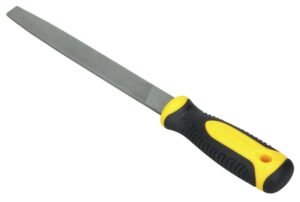
Materials and Manufacturing Process of Files and Rasps
High-carbon steel is the most common material used for both files and rasps. The manufacturing procedure involves:
- Forging or creating a blank shape
- Tooth slicing or punching
- Heat treatment for toughness
- The treatment of the surface and the process of tempering it.
The process of heat treatment is essential. Effective hardening promotes the retention of sharpness in teeth while preventing them from breaking. The process of tempering decreases the brittleness of the material, thereby increasing the life of the tool.
Modern manufacturers also utilize coatings like black oxide to increase corrosion resistance.
The resistance and durability of high-quality files and rasps make them long-term investments for professionals who use them.
Advantages of Using Files and Rasps Over Power Tools
Although electric grinders and rotary tools offer speed, files and rasps provide distinct advantages:
- Greater precision in delicate tasks
- No heat buildup that could alter material properties
- Lower cost and maintenance
- Portability and no power requirement
- Reduced risk of over-removal
Manual control remains critical in applications where material integrity must be preserved.
Maintenance and Proper Usage
Effective maintenance increases the lifespan of the tool. Users must:
- Remove the file from your teeth with a clean card.
- Avoid using the lateral method.
- Preserve tools in dry environments.
- Use the appropriate safety handles.
Failure to maintain the tools results in teeth that are clogged and decreased efficiency of cutting.
Industrial Relevance in Modern Manufacturing
Despite the advances in automation, files and rakes are still commonly employed in aerospace, automotive repair, shipbuilding, and metal creation. They’re vital to the prototype’s refinement, repairs, and customization. When machine access is limited, these features are of paramount importance.
Hand finishing has a high priority in the production of high-quality products; this is particularly true of products with a high value.
FAQ: Files and Rasps
Q1: What is the main difference between files and rasps?
Files are fine-toothed tools mainly used for metal finishing, while rasps have coarse teeth designed for shaping wood and softer materials.
Q2: Can files be used on wood?
Yes, but they are less efficient than rasps for rapid shaping. Fine files are sometimes used for detailed finishing on hardwood.
Q3: Why are files made from high-carbon steel?
High-carbon steel provides the hardness required to maintain sharp cutting teeth under friction and pressure.
Q4: How long do files and rasps last?
With proper care, professional-grade tools can last many years, depending on usage frequency and material hardness.
Q5: Are files still relevant in CNC machining environments?
Absolutely. Manual finishing and deburring remain critical even after automated machining processes.
Conclusie
Files and rasps are more than simple mechanical tools that serve as precision instruments that connect mechanical engineering and craftsmanship. Their design, composition of materials, and tooth configuration have a direct effect on their function and performance.
Files have a successful record of controlled harvesting and metal dealloying, while rasps have a dominant role in rapid material transformation in woodworking and other fields.
Today, in industries that require precision and flexibility, these instruments are still important. Whether it’s refining a machined component of aerospace or sculpting a handcrafted leg in a chair, files and rips provide control, reliability, and versatility that machines alone cannot emulate.
By understanding their composition, classification, and application, professionals can choose the appropriate tool for the appropriate task, which will lead to efficiency, quality, and safety in diverse industrial and craft environments.