Resumo
Material removal and surface finishing are foundational processes in manufacturing, woodworking, and metalworking industries.
Hand-finishing tools like Files and Rasps continue to be vital despite progress in CNC machining because of their accuracy, control, and flexibility in handling intricate shapes.
These tools work by controlled abrasion, allowing craftsmen and engineers to smooth surfaces, modify dimensions, and attain the preferred finishes.
The 2026 industry guide offers a detailed analysis of Files and Rasps, covering their design principles, classifications, uses, material compatibility, and innovations.
Introduction: Why Files and Rasps Still Matter in Modern Industry?
In a time when automation, robotics, and high-speed machining prevail, it might appear that manual tools such as Files and Rasps are becoming outdated. Nonetheless, this belief ignores an essential truth: no automated system can fully replicate the tactile accuracy, flexibility, and subtle control of experienced manual finishing.
Files and rasps act as the last stage in numerous manufacturing procedures, guaranteeing precise dimensions, refining jagged edges, and preparing surfaces for finishing or assembly. They are essential in sectors that demand personalization, restoration, and intricate detailing. Whether in aerospace parts or artisanal furniture, these tools connect rough machining with the quality of the final product.
What Are Files?
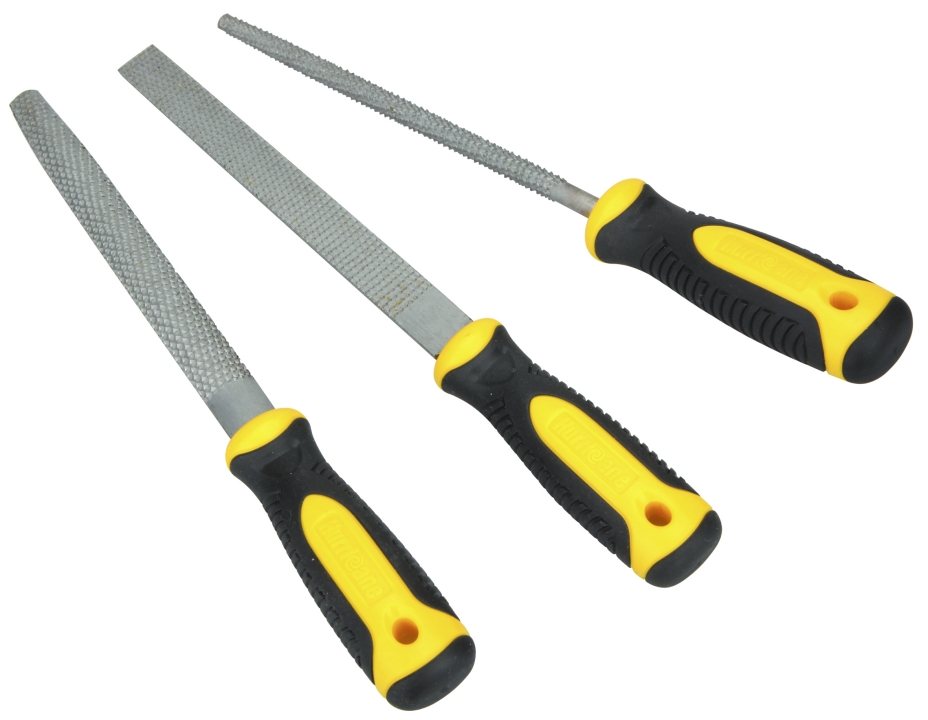
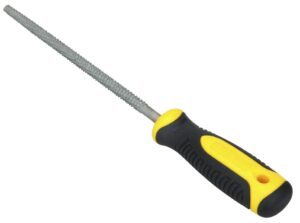
Files are tools made of hardened steel with a series of accurately cut teeth intended for controlled removal of material. They are mainly used on metals, but can also be used on plastics and wood, depending on the design of the teeth.
Key Characteristics of Files
- They have fine, uniform teeth for smooth finishing.
- Constructed from hardened steel for durability.
- They are available in multiple shapes and sizes.
- Designed for precision and controlled abrasion.
Files are mainly used in metalworking, engineering, and precision fabrication, where smooth finishes and tight tolerances are needed.
What Are Rasps?
Rasps resemble files but have larger, individually raised teeth. They are intended for quick removal of material, especially in softer substances like wood, plaster, and composites.
Key Characteristics of Rasps
- They have coarse, aggressive teeth.
- They remove material more quickly.
- They produce a less refined finish than files.
- They are suitable for shaping and rough work.
Rasps are commonly used in woodworking, sculpture, and construction, where speed and efficiency in material removal are more important than a smooth surface.
Key Differences Between Files and Rasps
Understanding the distinction between Files and Rasps is essential for selecting the right tool for specific applications.
Comparison Table
| Feature | Limas | Rasps |
| Tooth Design | Fine, uniform | Large, individually raised |
| Material Removal | Slow and precise | Fast and aggressive |
| Surface Finish | Smooth | Rough |
| Primary Materials | Metal, plastic | Wood, plaster, soft materials |
| Typical Use | Finishing and detailing | Shaping and rough work |
This comparison highlights that files and rasps complement each other rather than compete, each serving distinct roles in material processing.
Types of Files
Files are categorized based on shape, cut, and application.
Classification by Shape
| File Type | Description | Application |
| Lima Plana | Rectangular cross-section | General-purpose filing |
| Lima Redonda | Cylindrical shape | Enlarging holes |
| Half-Round File | Flat on one side, curved on the other | Versatile applications |
| Lima Quadrada | Square cross-section | Filing corners and slots |
| Needle File | Small precision files | Fine detailing work |
Classification by Cut
- Single-Cut Files: Smooth finish, fine material removal
- Double-Cut Files: Faster removal, rougher finish
- Rasp-Cut Files: Hybrid between file and rasp
Types of Rasps
Rasps are also available in different forms depending on their intended use.
Common Types
| Rasp Type | Description | Application |
| Hand Rasp | Standard rasp for manual use | Wood shaping |
| Cabinet Rasp | Fine rasp for woodworking | Furniture making |
| Farrier Rasp | Heavy-duty rasp | Horse hoof trimming |
| Needle Rasp | Small rasp for detail work | Sculpting and crafts |
Materials and Construction
- Limas
Files are usually crafted from high-carbon steel or alloy steel, which are hardened via heat treatment to ensure sharpness and durability. To enhance wear resistance and minimize clogging, advanced coatings might be applied.
- Rasps
Rasps are also made from hardened steel but may feature specialized tooth patterns for improved cutting efficiency in softer materials.
Applications Across Industries
- Metalworking and Engineering
Files are crucial for removing burrs, smoothing surfaces, and fine-tuning metal parts. They are utilized in tool manufacturing, machining processes, and maintenance tasks.
- Trabalho em Madeira
Rasps are commonly employed to shape wood, especially in the creation of furniture, cabinetry, and sculptures. They enable artisans to craft natural forms and curves.
- Automotive and Aerospace
Files are utilized for precise adjustments and the finishing of components, guaranteeing adherence to strict tolerances.
- Construction and Remodeling
Rasps are employed for shaping drywall, plaster, and soft materials during installation and finishing.
- Jewelry and Craftsmanship
Needle files and rasps are used for intricate detailing in jewelry design and artistic work.
Performance Considerations
Efficiency and Control
| Factor | Limas | Rasps |
| Precision | High | Moderate |
| Speed | Moderate | High |
| Surface Quality | Smooth | Rough |
| Skill Requirement | High | Moderate |
Durability and Maintenance
File (tool) and Rasp (tool) are crucial hand tools employed for shaping, smoothing, and removing material. Their durability largely relies on correct usage and upkeep.
- Material Strength and Wear Resistance
Usually crafted from hardened steel to ensure longevity
Files feature finer teeth, whereas rasps possess coarser teeth for more aggressive material removal
- Cleaning and Debris Removal
Utilize a file brush (card) to clear away clogged particles
Prevent buildup, which decreases cutting efficiency.
- Proper Storage
Store tools separately to prevent damage to teeth.
Keep in dry environments to avoid rust.
- Lubrication (When Needed)
Light oiling can help reduce clogging when working with softer metals.
- Avoid Misuse
Do not use files as pry tools or apply excessive force
Use the correct type for the material (wood vs metal)
Advantages of Files and Rasps
- Precision Control
Allow detailed shaping and finishing work, especially in tight or intricate areas
- No Power Required
Manual operation makes them reliable in any environment without electricity
- Versatilidade
Suitable for wood, metal, plastic, and other materials, depending on tooth design
- Cost-Effective Tools
Low initial investment and long service life with proper care
- Wide Variety of Shapes and Cuts
Flat, round, half-round, and specialty profiles for different applications
Limitations and Challenges
- Labor-Intensive Process
Manual effort required, which can be time-consuming for large-scale tasks
- Limited Speed Compared to Power Tools
Slower material removal compared to grinders or electric sanders
- Wear Over Time
Teeth become dull with extended use, reducing efficiency
- Material-Specific Constraints
Using the wrong tool on the wrong material can lead to poor results or damage
Comparison with Power Tools
| Feature | Files & Rasps | Power Tools |
| Precision | High | Variable |
| Speed | Low to moderate | High |
| Control | Excellent | Limitado |
| Cost | Low | High |
| Maintenance | Minimal | Complex |
Manual tools remain essential where precision and control are critical.
Future Trends (2026–2030)
- Advanced Materials
Development of carbide-coated and diamond-coated files for extended durability.
- Ergonomic Design
Improved handles and grip designs to reduce fatigue.
- Hybrid Tools
Combination tools that integrate file and Rasp functionalities.
- Smart Tools
Integration of sensors to monitor wear and usage patterns.
Common Misconceptions
- “Files and rasps are interchangeable.”
Files are designed for finer finishing, while rasps are for rough shaping, especially in wood.
- “More pressure equals faster results.”
Excessive force can damage the tool and reduce effectiveness; controlled strokes are more efficient.
- “They don’t require maintenance.”
Regular cleaning and proper storage are essential for maintaining performance.
- “Only for woodworking or metalworking.”
These tools are used across multiple industries, including manufacturing, crafts, and repair work.
FAQ: Files and Rasps
- What is the main difference between files and rasps?
Files are used for precise finishing, while rasps are used for rapid material removal.
- Can files be used on wood?
Yes, but rasps are generally more efficient for wood shaping.
- How do you maintain files and rasps?
Clean them regularly, store properly, and avoid misuse.
- Are rasps suitable for metal?
No, rasps are designed for softer materials like wood and plaster.
- Which tool is better for beginners?
Rasps are easier for beginners due to their aggressive cutting action.
Conclusão
Files are essential tools in contemporary manufacturing and craftsmanship. Rasps are particularly effective for quick shaping and removing material, while files offer accuracy and smooth surfaces. They work together as a complementary set, connecting rough work with polished outcomes.
For professionals and businesses, it is essential to understand the capabilities, applications, and limitations of these tools to achieve optimal performance. Files and Rasps continue to play a vital role in delivering quality, efficiency, and craftsmanship in 2026 and beyond, from metalworking to woodworking.